


Removing foreign bodies
“Do or do not. There is no try.” *
Preparation
The guiding principle is to set everything up for success, and then to take the foreign body out.
In the majority of cases, you will have one good chance to remove the foreign body before the patient’s cooperation vanishes. This applies more in children and those with learning disability but equally, not many adults will stay still for an increasingly painful procedure.
Keep everyone calm
Talk frankly with the parents/carers – they need to be firm to be kind
Brief them about the importance of holding the patient tightly (if applicable) and show them what you mean
General anaesthetics involve risk and waiting, which can be avoided if you are successful on the first go
Get help eg nurse or another doctor
Ideally, do this in a room, as screaming puts other people off (just be honest with the parents)
Make sure you can see the foreign body – get a good light or microscope that leaves your hands free
Get your instruments ready
Good restraint is very important, and if you aren’t convinced that the parent or carer can be firm, you may want to consider other options (e.g. wrapping a small child in a blanket).
Removal
Make sure the patient is as steady as possible
Visualise the foreign body with anterior rhinoscopy / microscope depending on location
Decide in advance which method is most likely to remove the foreign body.
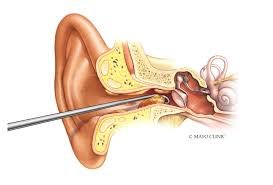
Often the preferred method is to use a blunt wax hook, especially for beads. Pass it behind the bead, rotate the hook so it is behind the bead, and roll the foreign body out.
Zoellner suction catheters can be useful for sucking out secretions, soft food, or light, flat foreign bodies.










Reviews
There are no reviews yet.