



Requires Prescription: Yes
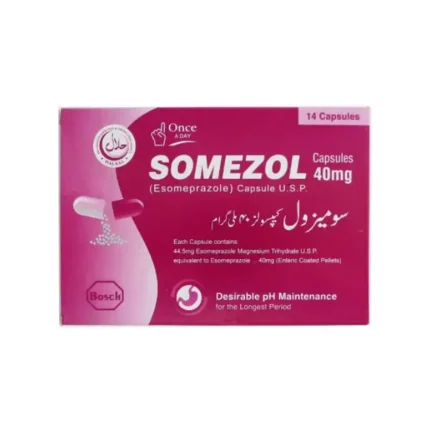
Active Ingredient: Esomeprazole
Used For: Treatment of Acidity & Ulcers
How It Works:
Esomeprazole irreversibly binds to the H+/K+ ATPase enzyme in the proton pump of stomach parietal cells. By inhibiting this final step in the secretion of hydrochloric acid, it significantly reduces acid production and alters the gastric pH.
Esomax Capsules Usage and Safety:
Dosage: Esomeprazole
Side Effects: Common side effects include headache, gastrointestinal upset, skin reactions, and dry mouth. Rare side effects may include angioedema, anaphylaxis, and fundic gland polyps.
Drug Interactions: Esomeprazole may interact with drugs such as Phenytoin, Warfarin, Clopidogrel, Ketoconazole, Itraconazole, Voriconazole, Diazepam, Citalopram, Imipramine, Clomipramine, CYP3A4 inhibitors or inducers, Tacrolimus, Digoxin, Erlotinib, and Methotrexate.
Indications:
Esomax Capsules are indicated for the treatment of heartburn, GERD, gastritis, and ulcers.
Contraindications:
Esomeprazole is contraindicated in patients with known hypersensitivity to proton pump inhibitors (PPIs). Hypersensitivity reactions, including angioedema, anaphylaxis, bronchospasm, acute interstitial nephritis, and urticaria, have been reported.
Esomax Capsules Precautions:
Precaution: Long-term use, particularly for more than 3 years, may lead to malabsorption or a deficiency of cyanocobalamin (Vitamin B12).
Esomax Capsules Warnings:
Warning 1: Hypomagnesemia (low magnesium levels) has been rarely reported with prolonged PPI treatment.
Warning 2: Long-term and multiple daily dose PPI therapy may increase the risk of osteoporosis-related fractures of the hip, wrist, or spine.
Warning 3: Avoid concomitant use of Esomeprazole with Clopidogrel due to potential interaction.
Additional Information:
Pregnancy Category: Always consult your physician before using any medication.
Storage: Store at room temperature, away from direct light and heat.













Reviews
There are no reviews yet.